The Role of Custom Metal Fabrication in Advanced Rack Design
Considerations for selecting enclosure or rack design include weight requirements and integration needs. Your search may have to extend beyond catalog searches to secure the most appropriate option for long-term scalability.
Rack designs are becoming increasingly application-specific, leading to significant differences in practicality between custom and off-the-shelf options. This guide examines the performance of custom rack enclosures and the importance of quality fabrication.
The Hidden Variable in Rack Performance
The key focuses of rack design are the requirements, such as dimensions, load ratings, airflow and standards compliance. Comparing these metrics across designs helps engineers decide which rack or enclosure has better credentials. However, performance measures are more than metrics.
Additional factors affecting a rack or enclosure’s performance include the fabrication process. For example, the quality of the cuts and finish influences an enclosure’s overall reliability and life cycle. Even if two racks appear to have similar metrics, the one with higher quality manufacturing will inevitably be more durable.
Environments like thermally sensitive and high-density areas can affect performance. Slight variations, including uneven welds and poor finishes, may compound over time.
Why Precision Metal Fabrication Matters
Precision metal fabrication is primarily responsible for the longevity of a rack or enclosure. The following are several key aspects to consider regarding precision metal fabrication:
- Commodity racks masking variations: Particularly for domestic metal fabrication designs, minor finish inconsistencies are unlikely to affect rack performance. These designs are made to accommodate lighter loads, with irregularities becoming relatively unnoticeable. In demanding applications like healthcare and medical environments, these irregularities can have a greater impact on performance.
- Advanced designs magnify mistakes: There is less leeway for design variations with heavy components and high-density racks and enclosures. Even minor dimensional errors can lead to reduced airflow and compromised structural integrity.
- Production and design intent: Designing racks and enclosures to reach performance measures and the fabrication to meet these specifications is vital for stability. Unwanted changes to sheet metal fabrication tolerances can detract from the original design goals and affect performance.
- Aligning panels accurately: Metal fabrication precision is essential to ensure that panels align correctly. Alignment affects various areas, including the entire finish and sealing, for a reliable rack or enclosure. Accurate alignment reduces installation adjustments.
- Thermal and airflow abilities: Airflow and temperature stability are vital for rack or enclosure performance. Developing consistent vent holes and openings ensures airflow maintains stable temperatures and limits the risk of hot spots.
- Load distribution consistency: Maintaining precise dimensions ensures consistent loading when storing products of specific weights and forces. Dimensional precision helps keep the rack or enclosure stable during vibration and movement.
- Door and accessory integration: Precision in interfaces and mounting joints is fundamental to ensure accessories work well. Keeping precision spot-on with doors and accessories eliminates the stress of having to make modifications during installation.
5 Common Fabrication-Driven Failure Modes in Rack Systems
To understand the critical role of precision fabrication, explore some common ways manufacturing shortcomings can lead to significant problems in rack systems:
1. Tolerance Stack-Up Across Panels and Frames
Minor dimensional variations are inherent and unavoidable in any manufacturing process. Because achieving perfect uniformity is impossible, design tolerancing is critical.
If the numerous tolerances for individual components are not properly accounted for during the design phase, it can lead to a phenomenon known as tolerance stack-up. This occurs when minor dimensional inconsistencies compound across assemblies, as the accumulation of allowed variations from each detailed piece prevents them from aligning correctly at final assembly.
These issues can significantly affect the entire assembly of a rack or enclosure. Even minor cumulative differences can result in misaligned doors, poor gasketing and uneven load paths, leading to long-term problems like improper airflow control and potential structural damage.
2. Inconsistent Weld Quality
Distorted metal frames and panels may result from heavy, light or uneven welds. The distortion can affect the shifting of mounting points and the shapes of airflow openings. Welding issues may also become a challenge with accessory installation.
3. Mismatch Materials
The slightest change in the alloy or material gauge can alter the rack or enclosure’s vibration response and stiffness. These changes may affect the handling of dynamic loads and structural integrity. A common cause of material gauge and alloy changes is the use of different manufacturers for rack and enclosure construction.
4. Poor Finish Consistency
Powder-coated metal enclosures with uneven application affect their appearance. Additionally, uneven powder coating is damaging to rack areas, including fastener torque and electrical grounding. Poor surface preparation is another consideration that may lead to corrosion.
Applying a coating where it should not be applied, such as on fastener holes and electrical grounding points, can also lead to operational issues.
5. Limited Customization Flexibility
Off-the-shelf design options offer limited customization opportunities, such as adding vent patterns and cutouts. Limited customization means engineers have to adapt operations around the set design. Off-the-shelf designs can add various challenges to limit performance. Changes to future operations may also become complex.
How Custom Enclosure Fabrication Enables Advanced Rack Design
Precision fabrication enables engineers to achieve better performance in racks and enclosures. High-quality manufacturing provides engineers with confidence when working with detailed specifications and aligning with design requirements. Here are the key benefits of precision fabrication in rack design:
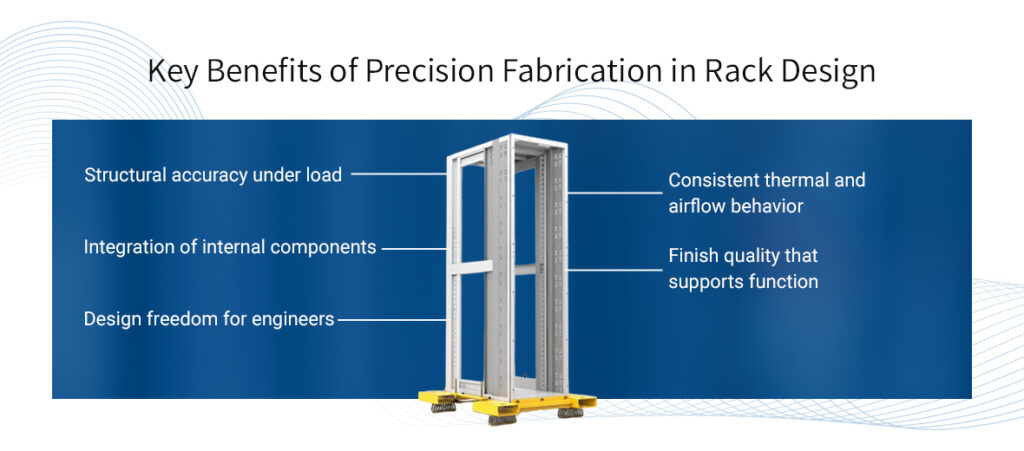
- Structural accuracy under load: Keeping tolerances tight allows for square frames. The forces and weight provide stability and support for the rack or enclosure, particularly beneficial for vibration and movement areas. Tight tolerances also help in areas of high transport, seismic activity and high-RU densities.
- Integration of internal components: Consistent locations for rail spacing and mounting points allow elements to fit comfortably with power distribution units (PDUs) and rails. Convenient fitting minimizes the need for adjustments and on-site modifications, making installation reliable and efficient.
- Consistent thermal and airflow behavior: Airflow movement is essential to maintaining thermal and cooling performance for racks and enclosures. The precise cutouts and vent holes help direct airflow and prevent panel misalignment and warping.
- Finish quality that supports function: Uniform powder coating maintains electrical grounding integrity, corrosion resistance and the overall appearance of racks and enclosures. A high-quality finish keeps the bolt fixings tight.
- Design freedom for engineers: Customization of racks and enclosures enables simpler adjustments, such as mounting points and cutouts. Off-the-shelf catalog designs are restrictive and limit performance potential compared to customized designs.
How Experts Approach Custom Metal Fabrication
A well-structured fabrication process facilitates the production of premium rack designs. Using elements such as precise alignment and consistency maintains a professional customization approach with each stage of the design and manufacturing process. Customization with fine detail keeps the potential for minor errors to a minimum. Here’s how Emcor Enclosures approaches custom metal fabrication.
In-House Fabrication With Tight Tolerances
Managing all fabrication elements in one place, such as laser cutting, welding and forming, allows engineers to measure the quality of fabrication during the manufacturing process. Keeping manufacturing and design operations in one space makes it easier to spot errors. Outsourcing components leaves the manufacturing process vulnerable to dimensional inaccuracies across multiple suppliers.
Material Flexibility Without Compromise
Sourcing a reputable fabrication manufacturer ensures that the rack or enclosure meets specifications and fits within the space, rather than prioritizing convenience and comfort. The choice of specialty alloys and steel is selected based on performance metrics and corrosion resistance.
Aligning the gauge material with the thermal and structural needs is essential to achieve the necessary performance for long-term goals.
Weld Discipline and Structural Integrity
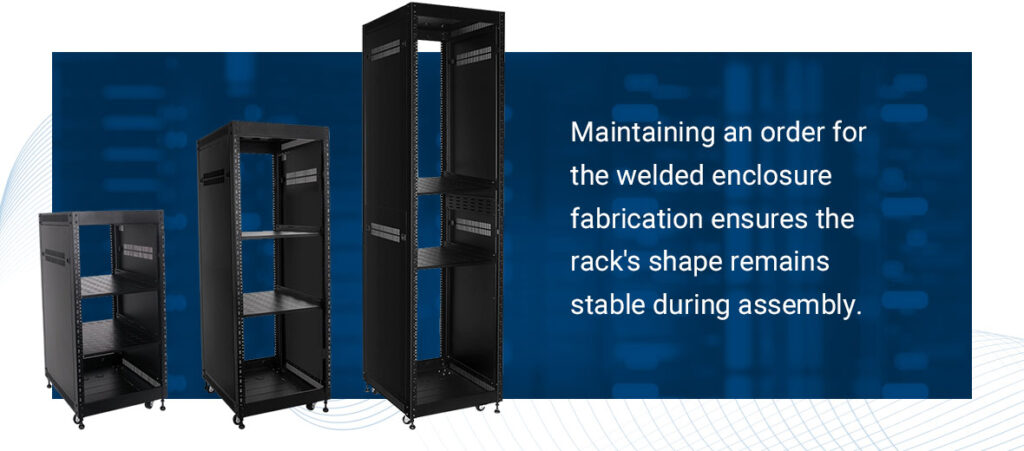
Particular attention to weld sequencing is critical to minimize the risk of heat-related distortion. Maintaining an order for the welded enclosure fabrication ensures the rack’s shape remains stable during assembly. Keeping the shape stable allows for flatter panels and straighter frames, resulting in consistent assemblies.
Finish Consistency and Quality Control
Proper curing processes and detailed surface preparation are pivotal elements for consistent powder coating. The correct application of powder coating is crucial for preventing corrosion and ensuring reliable electrical grounding. Frequent quality checks during manufacturing allow for reliable rack and enclosure results.
Keep a Clear Communication Channel
Preserving a close communication channel between fabrication and engineering fosters a collaborative approach to manufacturing racks and enclosures and enables design feedback. Maintaining regular communication enables quicker production and shorter lead times, providing confidence in rack customization.
What Happens When Fabrication Is Done Right
The durability of rack systems stems from high-quality fabrication. By achieving superior fabrication, your rack systems meet the necessary specifications and sustain top performance throughout the rack’s life cycle. The following outlines the benefits of fabrication:
- Improved structural rigidity: The key indicator of a well-structured rack and enclosure system is its strength in real-world scenarios. A firm structure allows the rack system to support equipment without the risk of shifting or twisting, which can create stress points.
- Airflow and thermal performance: Cooling performance is consistent across units due to the precise construction of the racks. Air circulation helps maintain a comfortable temperature, reducing thermal-related issues and ensuring smooth-running equipment.
- Quicker installation: Precision fabrication allows the rack elements to connect easily without the need for adjustments during installation. The installation process is more efficient, with limited customization options in the later stages.
- Lower retrofit and maintenance costs: Finding an experienced fabricator provides the confidence and reliability needed for precision rack systems. Using a reputable manufacturer keeps maintenance and retrofit costs down and reduces the likelihood of early replacements in the rack’s life cycle.
- Extending the rack lifespan: Quality fabrication extends the service life of the rack or enclosure and the equipment it secures. Replacement is less likely, and valuable fabrication gives the proper support with less vibration.
- Design repeatability and reliability: After the first successful rack design deployment, engineers lock in the design configuration and qualify the manufacturing process.
Fabrication Quality Checklist for Engineers
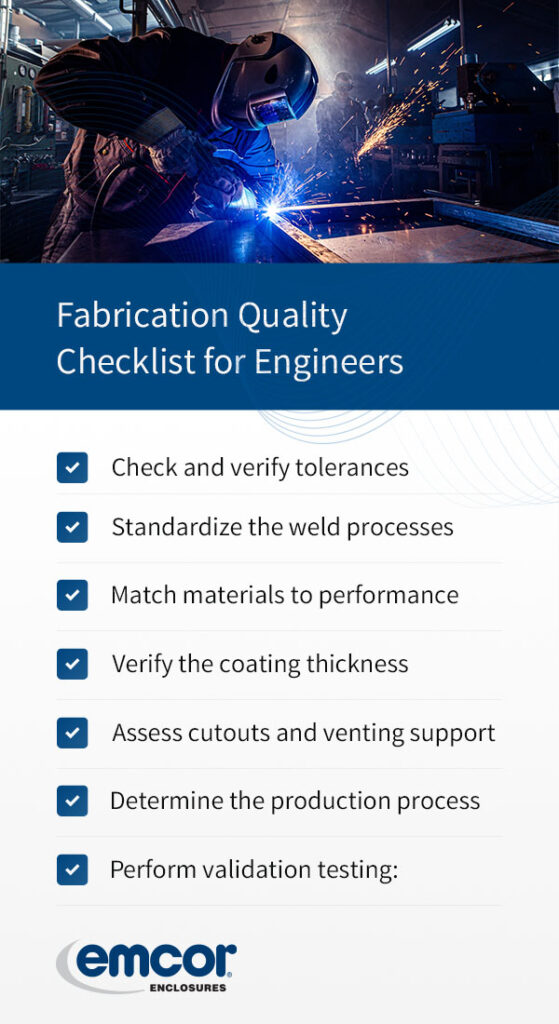
Alongside rack design, fabrication quality is an essential factor for reliability. The checklist below ensures racks meet practical requirements for long-term use:
- Check and verify tolerances: Clarify the specific dimensions so the manufacturer can use these measurements during production. Maintaining tight tolerances is key to fitting components and contributes to the rack’s performance.
- Standardize the weld processes: Qualifying the weld process allows for consistency to limit the likelihood of distortion and ensures all units gain structural strength.
- Match materials to performance: Make sure the manufacturer optimizes aluminum and steel for top performance. For example, steel and aluminum offer vibration resistance and thermal performance against temperature changes.
- Verify the coating thickness: Ensure the coating on the rack systems is even across all units. Maintaining even coatings allows for corrosion resistance and a sleek appearance.
- Assess cutouts and venting support: Before production begins, check that the fabricator can meet your specifications for customization, such as perforations and cutouts. Customization from the start keeps your operation running smoothly without requiring adjustments later.
- Determine the production process: Check whether the whole fabrication process is in-house or spread across various fabricators. Preferably, managing the process in a single space keeps error risk to a minimum and maintains quality control.
- Perform validation testing: Prior to installation, verify rack performance in real-world conditions. Review how a rack handles various situations, including load handling and temperature changes. A testing stage ensures the rack design meets your requirements.
Why Fabrication Is the Foundation of Rack Performance
For a durable rack system, the design must include precise fabrication to meet performance and longevity requirements. Engineers may initially believe that an off-the-shelf rack system will last for a long time. However, it’s essential to factor in fabrication quality to ensure a durable system with even finishes and welds.
Problems like misalignment and uneven cooling typically result from manufacturing, not design. To create a complete picture of a rack system’s performance, it’s crucial to analyze a design beyond the specifications and closely examine the fabrication qualities.
Why Trust Us for Server Rack Manufacturing
At Emcor, we provide personalized and custom experiences to manufacture industry-leading rack systems for a range of markets, from data center to air traffic control. We pride ourselves on bridging the gap between design limitations and manufacturing by delivering precision metal fabrication that meets specific requirements throughout the process.
Our knowledgeable team understands the fast-changing needs of your industry and can customize your rack systems for smooth operation. Furthermore, we’re proactively introducing new products to ensure you’re receiving the best support.
If you’re seeking additional products to support your business, we offer a diverse range of options, including wall mount cabinets, security cage systems and air-conditioned cabinets. By leveraging our extensive resources and expertise, you can trust us with precision manufacturing and practical design solutions.
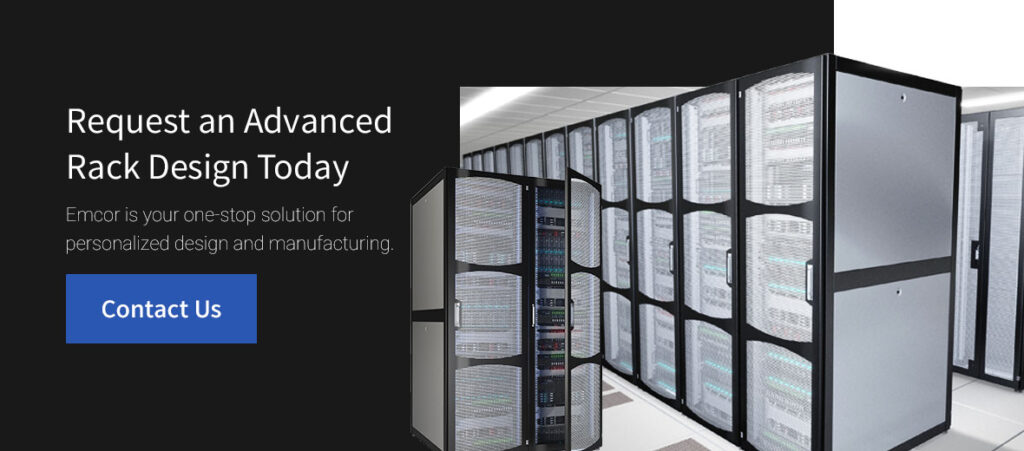
Request an Advanced Rack Design Today
Our selection of innovative solutions ensures you source products with confidence. If you’re seeking rack or enclosure systems with precision fabrication and custom specifications, Emcor is your one-stop solution for personalized design and manufacturing.
Discover your options and contact the team today to discuss your requirements.